Skip to content
100% Canadian-designed communications · Since 1992
+1 819 829 874924/7 worldwide support
Use Case

SIP Trunking

Interconnect SIP carriers and enterprise platforms with security, normalization and routing control.

CHOOSE A PRODUCT

Products to compare

A starting point for your project. Review the model data sheet before ordering.

CALL-PATH SCHEMATIC

Trace the sip trunking path end to end.

Every device and service is part of a live operating workflow. The diagram makes the translation point, trust boundary and acceptance target visible.

NO PUBLIC INTERNET REQUIRED

Private LAN / isolated IP network

Local phones, a local IP PBX, Mediatrix gateways and Sentinel can exchange SIP calls entirely inside the organization. The voice path can remain on a private LAN, VLAN, campus network or isolated operational network.

REQUIRED FOR OFF-SITE / PSTN CALLS

Carrier SIP trunk

The carrier path is needed only for calls that leave the private voice domain or arrive from public telephone numbers. Internal extension-to-extension calls can stay local.

PRIVATE CUSTOMER NETWORK

Secondary carrier

Provides an alternate route only when failover is designed and tested.

PBX / UC server

Owns extensions, call features and internal dial plans.

Users & contact center

Place and receive calls through the enterprise platform.

Operations

Reviews alarms, call records, certificates and configuration state.

PRIVATE IP NETWORK / LANLocal SIP signaling + RTP media
INTERNAL
SECURITY BOUNDARY
TRUST BOUNDARY

Sentinel SIP boundary

Creates a controlled demarcation for identity, routes, media, capacity and failure behavior.

OPTIONAL EXTERNAL SERVICES

Primary SIP carrier

Delivers public calling with its own SIP profile and routing rules.

READING THE DIAGRAM

The SBC is the controlled border between two voice domains

Sentinel SBC
Secures and normalizes SIP between voice domains, controls media and routing, and hides the internal network.
SIP carrier
Connects the organization to the public telephone network and supplies telephone numbers and external call routes.
PBX or call server
Controls extensions, features and call routing. It may run on-site, in a data center or as a hosted service.
Operations
Owns monitoring, backups, certificates, software lifecycle and the response when a route or carrier fails.

Use-case model — field validation remains mandatory for endpoints, carriers and safety-related workflows.

VALIDATION MATRIX

The checks that prevent a silent failure after cutover.

A sip trunking design should answer each question before rollout, not after the first incident.

Safety, emergency, alarm and regulated services require approval from the responsible authority and service provider for the actual deployment.
Validation layerQuestion to answerEvidence to collectOwner
EndpointDoes the real device behave correctly over the new path?Dialing, media and feature testCustomer / integrator
NetworkAre latency, jitter, NAT and QoS controlled?Capture and quality baselineNetwork team
ServiceDoes the carrier support the required call or data behavior?Carrier-accepted test resultCarrier / service owner
FailureWhat happens during power, WAN or platform loss?Failover and recovery testOperations
LifecycleWho owns updates, certificates, backups and escalation?Approved runbook and entitlementService owner
FREQUENTLY ASKED

What to know before the next step.

READY FOR THE NEXT STEP?

Build the right voice architecture.

Share the product, deployment and target outcome. M5 will identify the right technical and commercial path.

Request a free review
PRODUCTS→ PRODUCTS

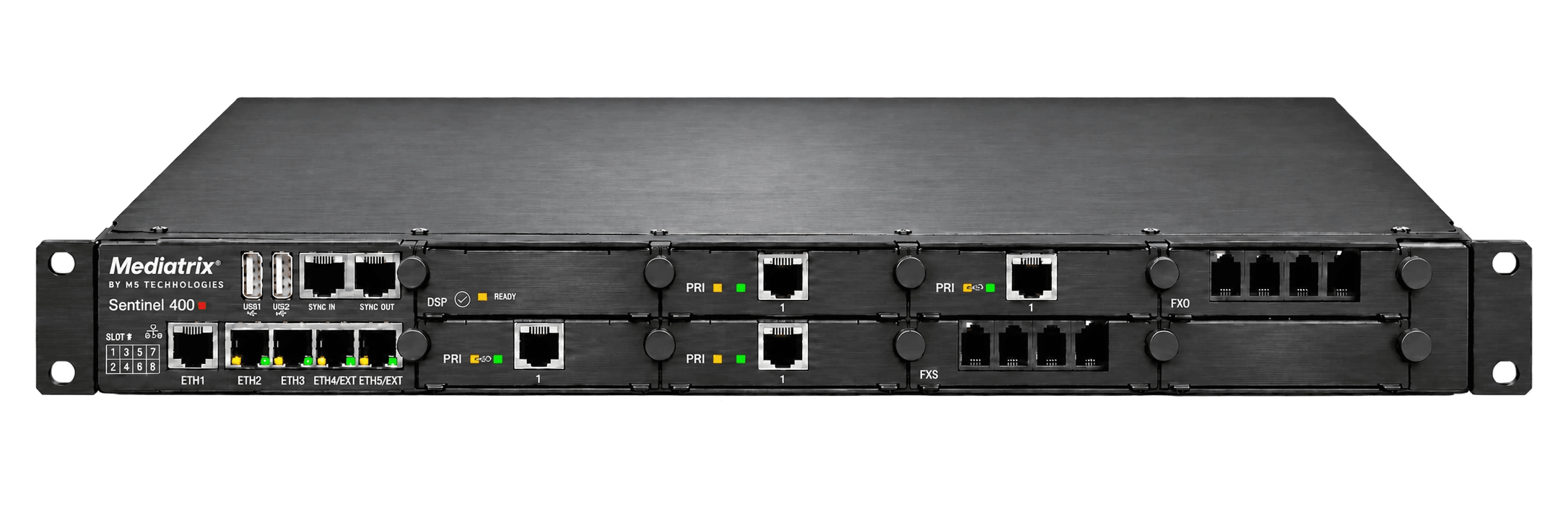
Sentinel SBC

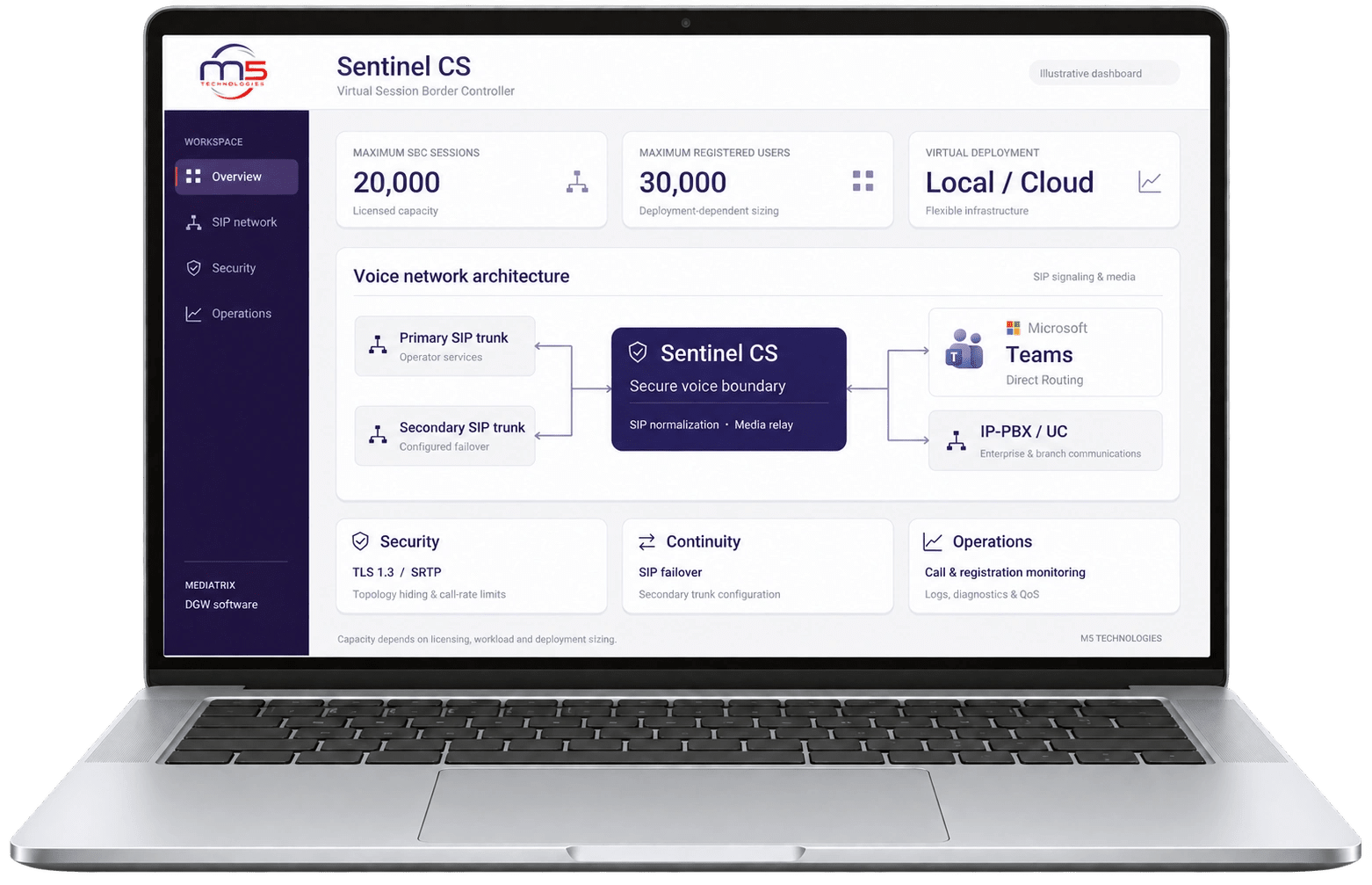
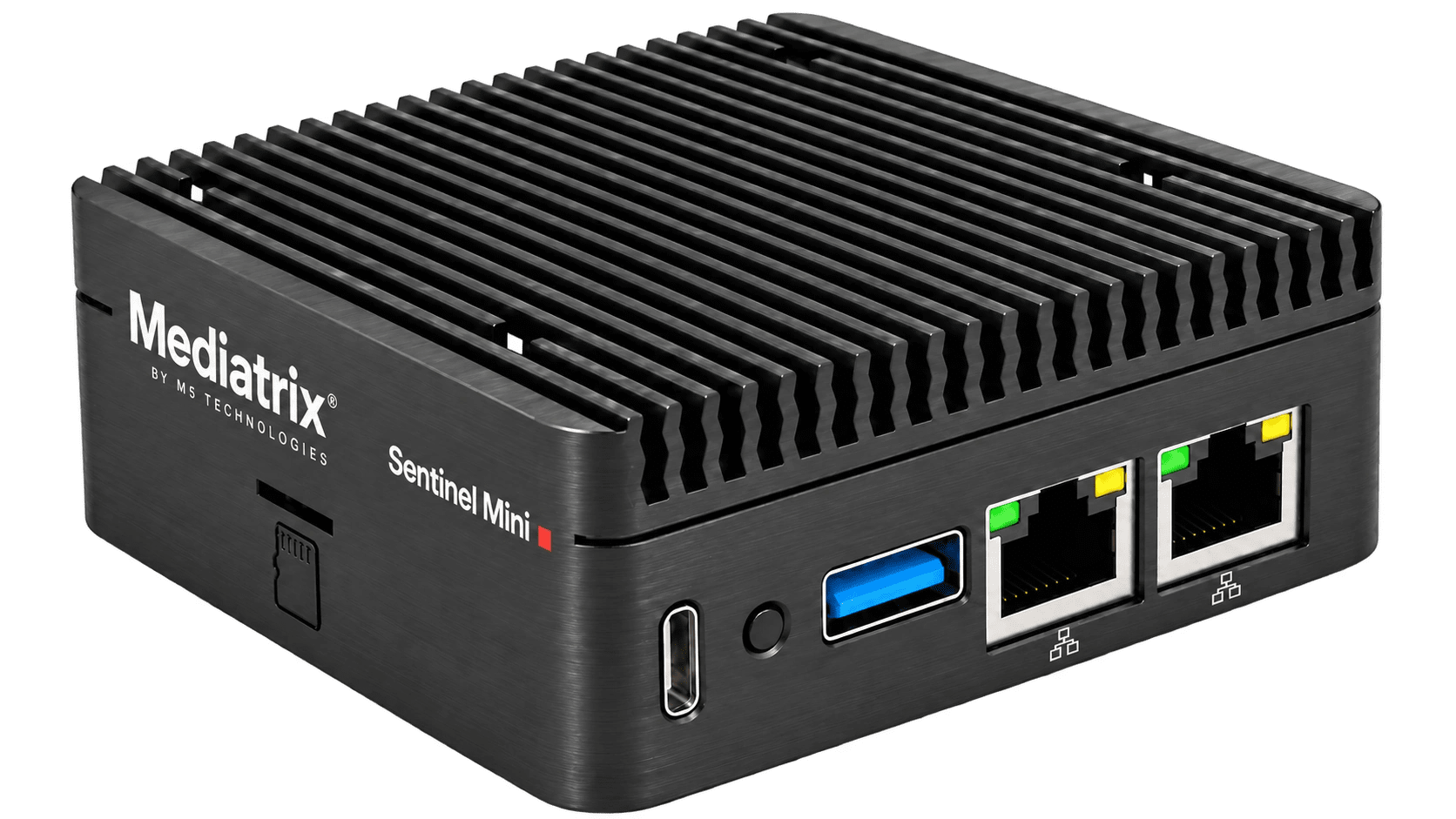
Sentinel SBC SeriesSentinel Mini SBCSentinel 100 SBCSentinel 400 SBC & GatewaySentinel CS Virtual SBC

Gateways & ATA

Mediatrix 4102 / 4102SMediatrix C7 SeriesMediatrix G7 SeriesMediatrix S7 / S7 LPAudiotrix C2, C4 & C8

Software & OEM

DGW SoftwareM5T SIP Client Engine SDKM5T E-DVAM5T softDSP
SOLUTIONS→ SOLUTIONS

Enterprise Telephony

Microsoft Teams Direct RoutingSecure SIP TrunkingManaged Voice SecuritySecure Voice Edge for AI Agents

Modernization

POTS ReplacementEmergency Calling & NG9-1-1Critical Infrastructure Communications

Embedded & Critical

OEM & Embedded VoiceTactical & Critical CommunicationsTelecom Security for Defence

Operational use cases

Microsoft Teams MigrationPOTS & Analog ReplacementAI-Ready CommunicationsEmergency Calling & NG9-1-1
INDUSTRY→ INDUSTRY

Public & Critical

GovernmentDefenceCritical InfrastructureUtilities & Energy

Transportation

Airports & AviationRail & Transportation

Enterprise

Banking & Financial ServicesHealthcareEducationHospitalityTelecom Operators & MSPs
RESOURCES→ RESOURCES

Documentation

Documentation CenterKnowledge CenterDGW FirmwareRelease NotesConfiguration GuidesConfiguration NotesHardware Installation GuidesProduct Data SheetsTechnical Bulletins

Learn

What is SIP?What is an SBC?TLS & SRTP ExplainedSecurity & Trust Center

Support & Services

Technical SupportDGW License CenterLicense SupportDGW Firmware & Update AccessMSA Maintenance PlansTraining & CertificationProduct WarrantyRMA Policy & Procedure

Company

Why M5 TechnologiesAbout M5 TechnologiesAwards & CertificationsPartners
REQUEST A FREE REVIEWTechnical support

Cookie settings

Essential cookies keep the site and cart working. You can accept or decline optional analytics and marketing cookies.