
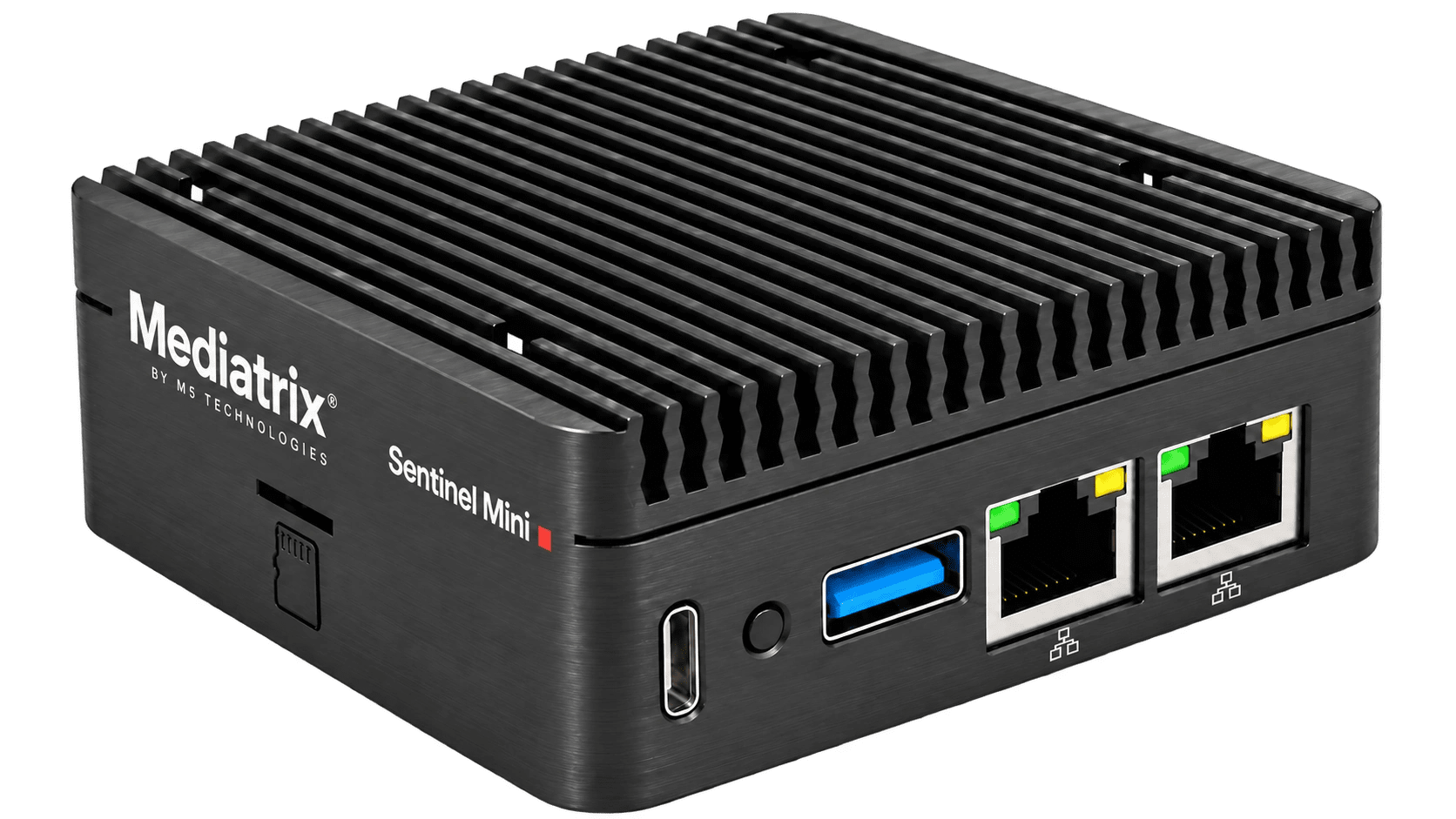
Sentinel Mini SBC
A compact SBC for a branch or a dedicated SIP edge.
- Selection criterion
- Required sessions, network ports, power supply and license.
Secure and modernize communications where voice supports safety, operations and service continuity.

A starting point for your project. Review the model data sheet before ordering.
A compact SBC for a branch or a dedicated SIP edge.
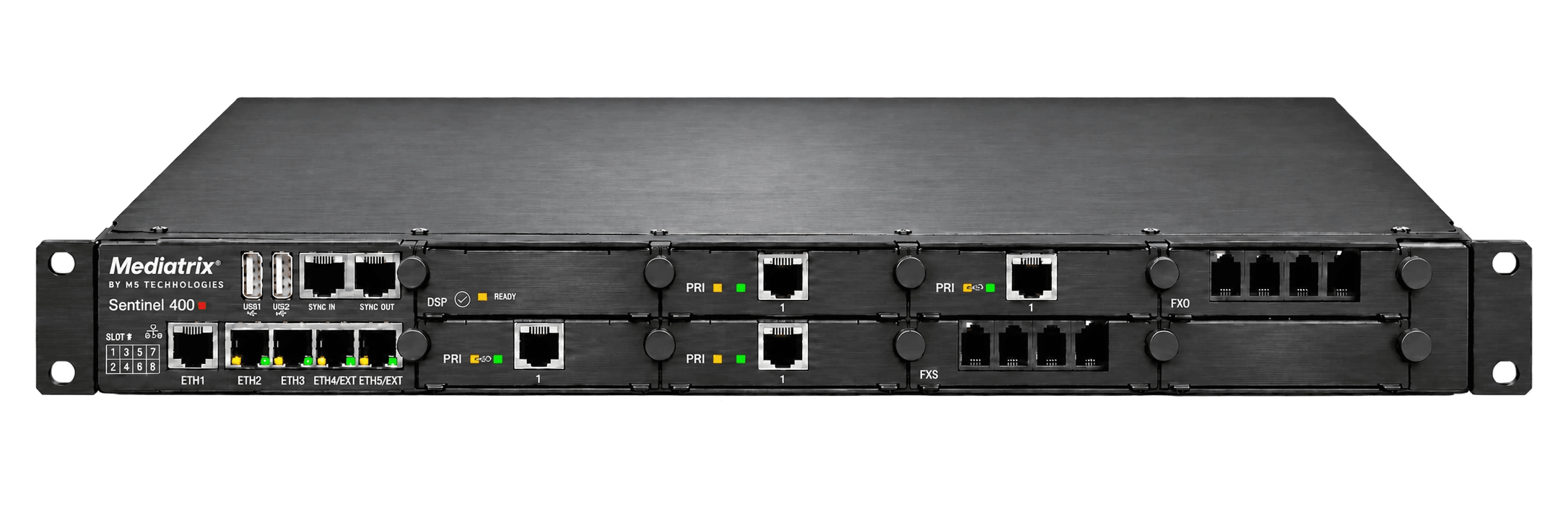
A modular voice edge for sites with mixed telephony interfaces.
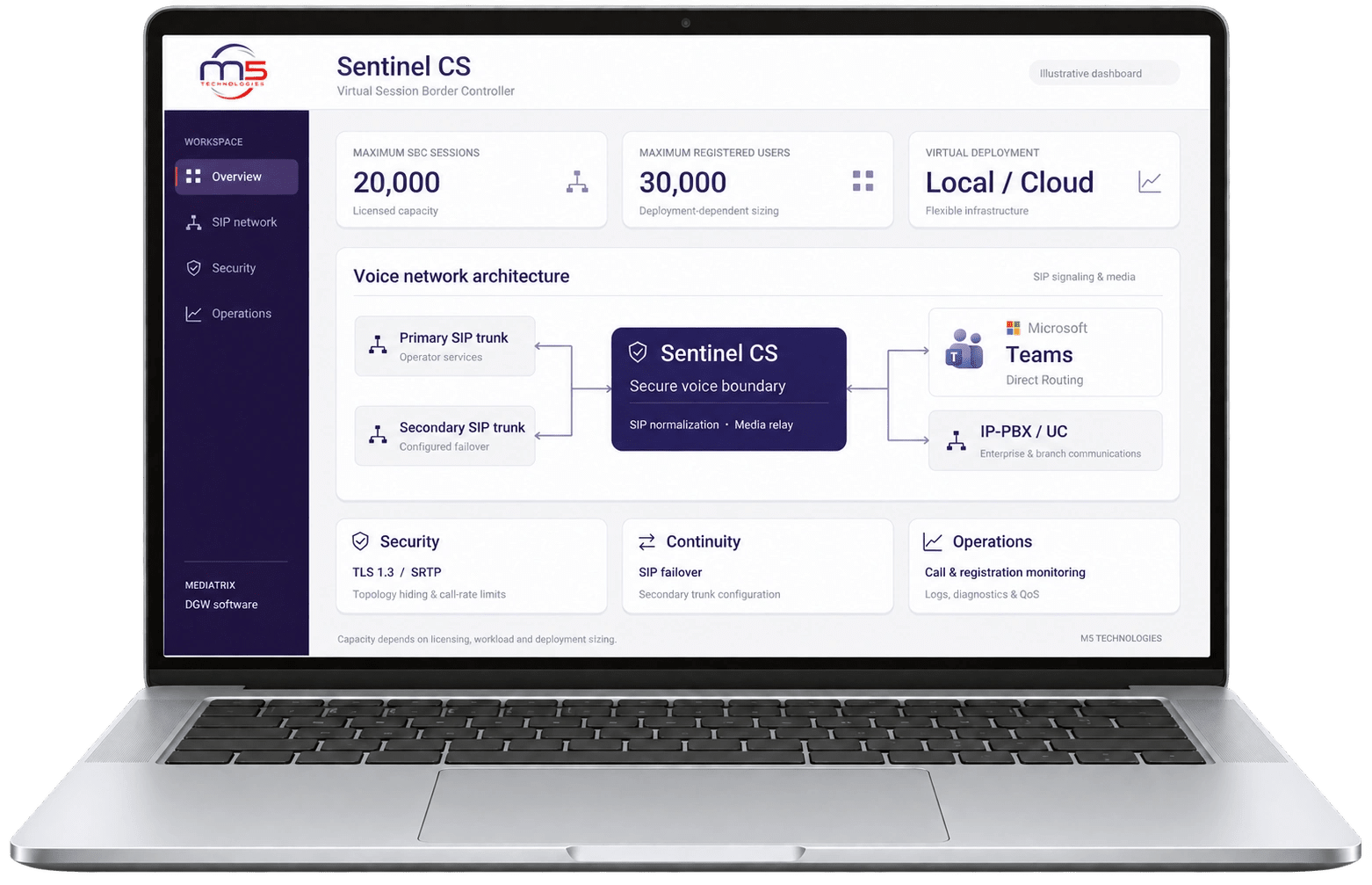
An SBC deployed on your virtual infrastructure.
Office telephony, operational communications and field devices have different consequences when they fail. They should not share an undocumented migration assumption.
Local phones, a local IP PBX, Mediatrix gateways and Sentinel can exchange SIP calls entirely inside the organization. The voice path can remain on a private LAN, VLAN, campus network or isolated operational network.
An external connection is used only when calls must reach public numbers, remote sites or hosted services. If the required call path is entirely local, the system can stay on the private network.
Local users and systems require an explicit primary call path.
Operational communications need their own priority, security and recovery rules.
Legacy or safety endpoints remain isolated until compatibility is proven.
Sentinel, Mediatrix and DGW controls are selected around the actual communications dependency.
Central call control, Teams or management services connect through a protected route.
External reachability includes a tested alternate path where continuity requires it.
Sector reference model — site policy, regulation and operational authority determine the final controls.
The critical infrastructure architecture should classify each service by consequence, dependency and recovery requirement.
Classification should be approved by the organization responsible for safety, compliance and service continuity—not inferred from the endpoint type alone.| Service class | Typical examples | Design priority | Proof before production |
|---|---|---|---|
| Enterprise voice | Users, reception, collaboration | Secure connectivity and user experience | Platform and carrier call tests |
| Facility voice | Intercoms, elevators, access points | Endpoint compatibility and local power | Device-level acceptance test |
| Operational voice | Dispatch, control room, field operations | Resilience, priority and clear ownership | Failure-mode exercise |
| Emergency services | Emergency phones and call routing | Location, reachability and supervision | Approved end-to-end procedure |
| Lifecycle | Certificates, firmware, spares, support | Repeatable governance across sites | Runbook and entitlement review |
Share the product, deployment and target outcome. M5 will identify the right technical and commercial path.