Skip to content
100% Canadian Designed Communications +1 819-829-8749 Microsoft Teams Certified SBC · 24/7 Worldwide Support
Media Gateway • ATA • Microsoft Teams Direct Routing Integration

Keep your analog infrastructure. Modernize your communications.

M5 Technologies helps enterprises, carriers and critical facilities connect analog phones, fax, alarms, elevators, emergency endpoints and PBX infrastructure to secure SIP, cloud voice and Microsoft Teams Direct Routing through Microsoft-certified Sentinel SBCs.

Microsoft Teams Direct Routing Certified SBC Carrier-Grade Communications 30+ Years of SIP & VoIP Expertise Made in Canada
Analog continuityPreserve compatible devices during POTS and PBX migration.
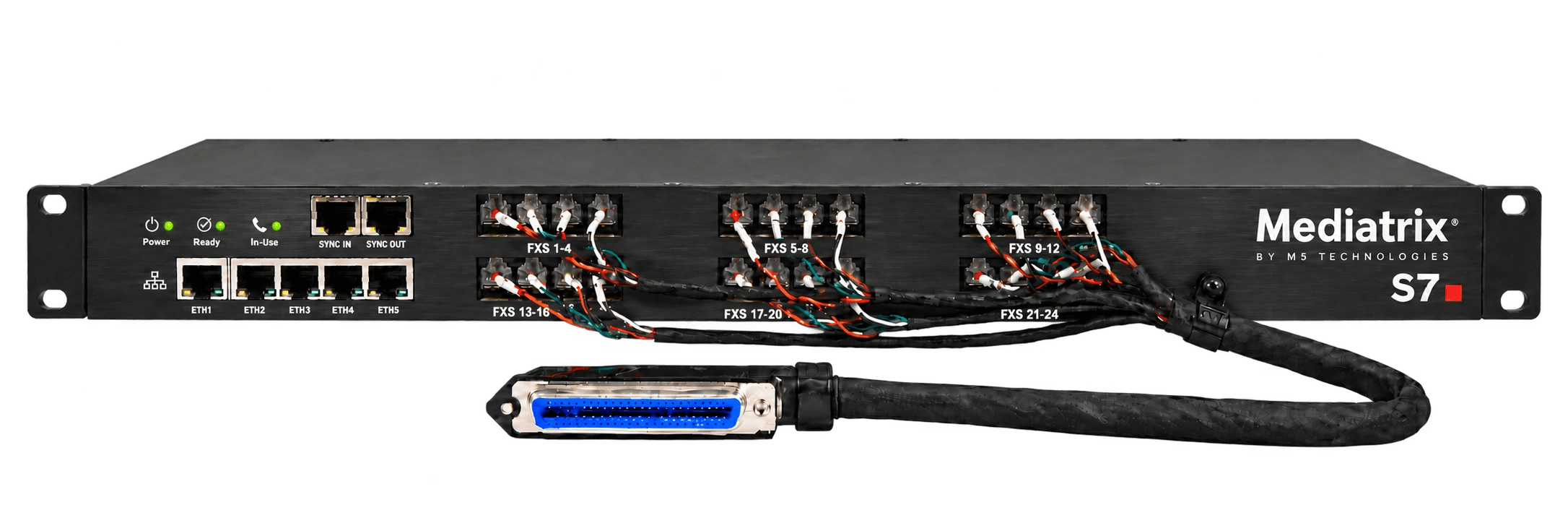
FXS & FXO optionsSelect the right interface for endpoints, lines and trunks.
SIP interoperabilityBridge legacy systems to carriers, PBXs, UC and SBCs.
Managed deploymentProvision, monitor and support distributed voice infrastructure.
How analog modernization worksLegacy endpoint → M5 gateway → secure IP voice
Modernization architecture
Analog and legacy systems
PhonesFaxElevatorsAlarmsPBX
M5 gateway and SBC layer
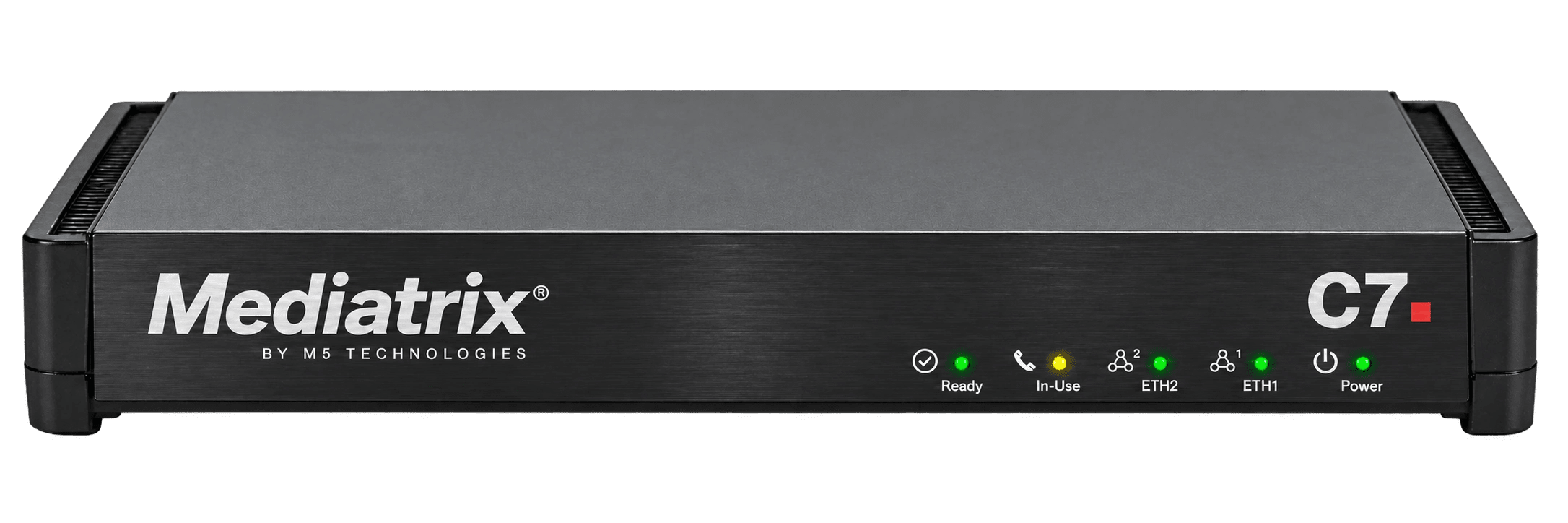
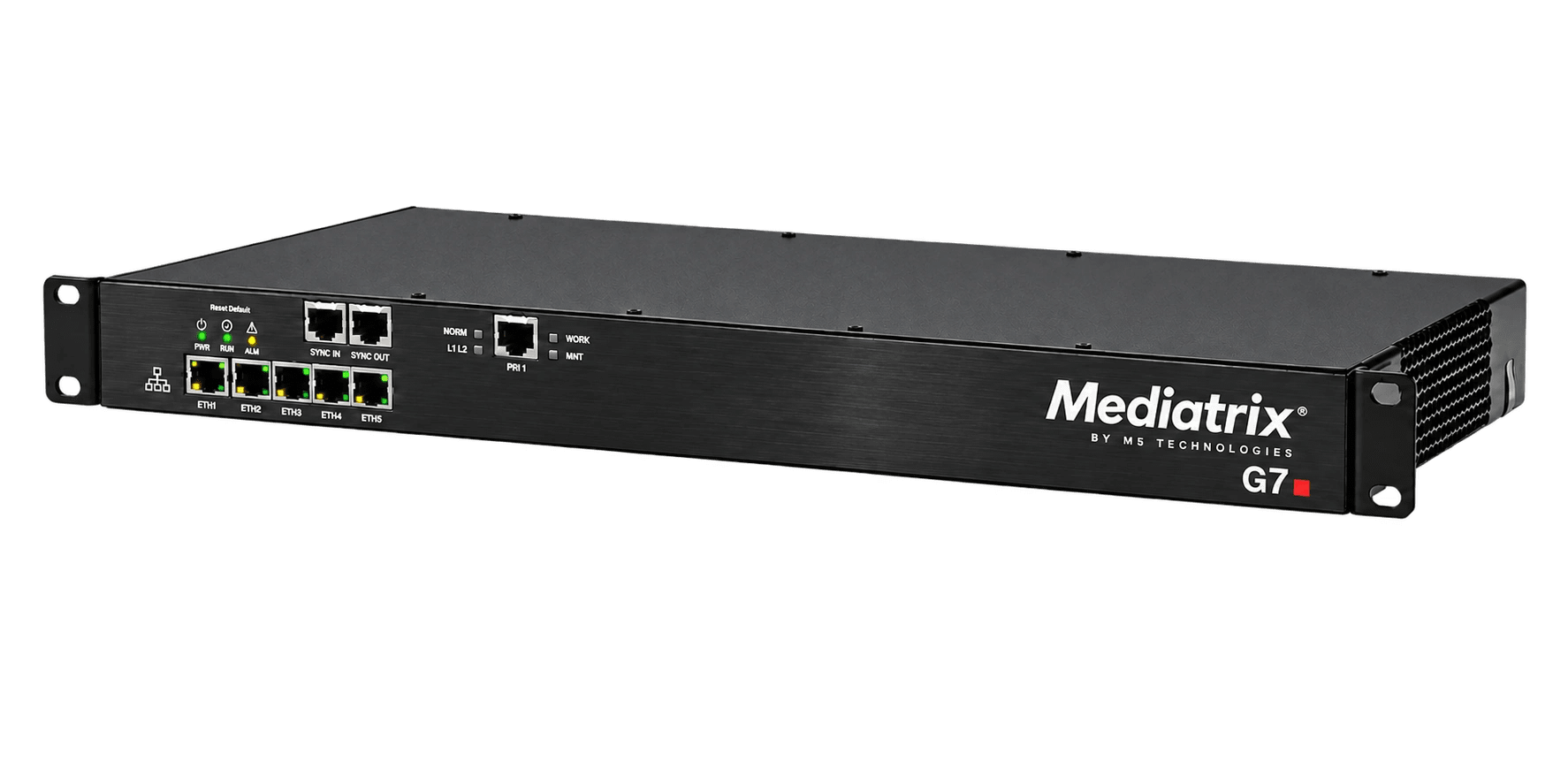
Mediatrix ATAC7G7Sentinel 400SIP policy
Modern communications platforms
SIP carrierCloud PBXIP-PBXMicrosoft Teams Direct RoutingEmergency services
PreserveWorking endpoints.
SecureThe SIP edge.
ModernizeIn controlled stages.
Microsoft Teams Direct RoutingSentinel SBCs are certified by Microsoft for Teams Direct Routing.
Carrier-Grade CommunicationsSecure SIP, gateway interoperability and enterprise voice continuity.
30+ Years of SIP ExpertiseTelecom engineering experience across enterprise and operator environments.
Made in CanadaCanadian-designed communications technology for global deployments.
The customer problem

Legacy devices still perform essential work, but copper, PBX and carrier infrastructure are changing.

Organizations need to modernize without creating avoidable replacement cost, service disruption or compatibility failures across fax, elevator, alarm, emergency and voice systems.

01

POTS retirement

Traditional analog services are becoming harder and more expensive to maintain.

02

Working legacy assets

Phones, fax, elevators and alarms may still be operationally required.

03

Interface confusion

Choosing the wrong FXS, FXO, PRI or BRI architecture can stop the project.

04

SIP and security gaps

Gateway-only deployments may lack routing control and edge protection.

Customer impact: the wrong gateway or ATA can create failed fax, unreliable endpoints, difficult remote support and an insecure SIP edge.
Solution comparison

ATA vs media gateway vs SBC-gateway architecture.

CriteriaATAMedia GatewaySentinel SBC + Gateway
Primary roleConnect one or a few analog endpoints to SIP.Bridge larger analog, digital, PBX or trunk environments.Combine interworking with SIP security and routing control.
Typical interfacesFXSFXS, FXO, PRI, BRI and model-dependent combinationsGateway interfaces plus SBC policy and secure SIP demarcation
Best scaleSmall branch or limited endpoint countBuilding, campus, PBX or larger migrationEnterprise, government, operator and critical infrastructure
SIP securityEndpoint-level security varies by modelGateway-focused security and signalingDedicated topology hiding, normalization, routing and policy
Microsoft Teams Direct RoutingRequires a certified SBCRequires a certified SBCSupported through Microsoft-certified Sentinel SBC architecture
Best fitSimple analog migrationComplex legacy-to-IP interworkingSecure hybrid voice edge and phased modernization
Interface guide

FXS vs FXO: choosing the correct analog interface.

InterfaceConnects toProvidesTypical use
FXSAnalog phone, fax, alarm, elevator or endpointDial tone, ringing voltage and battery feedConnecting analog devices to SIP
FXOAnalog PSTN line or PBX station/trunk interfaceReceives analog line service from another systemConnecting analog lines or legacy PBX trunks to IP
PRI / BRIDigital PBX or carrier trunkDigital voice channels and signalingMigration of larger legacy PBX and carrier environments
M5 portfolio guide

When to choose 4102S, C7, G7 or Sentinel 400.

PlatformBest fitTypical interfacesRecommended scenario
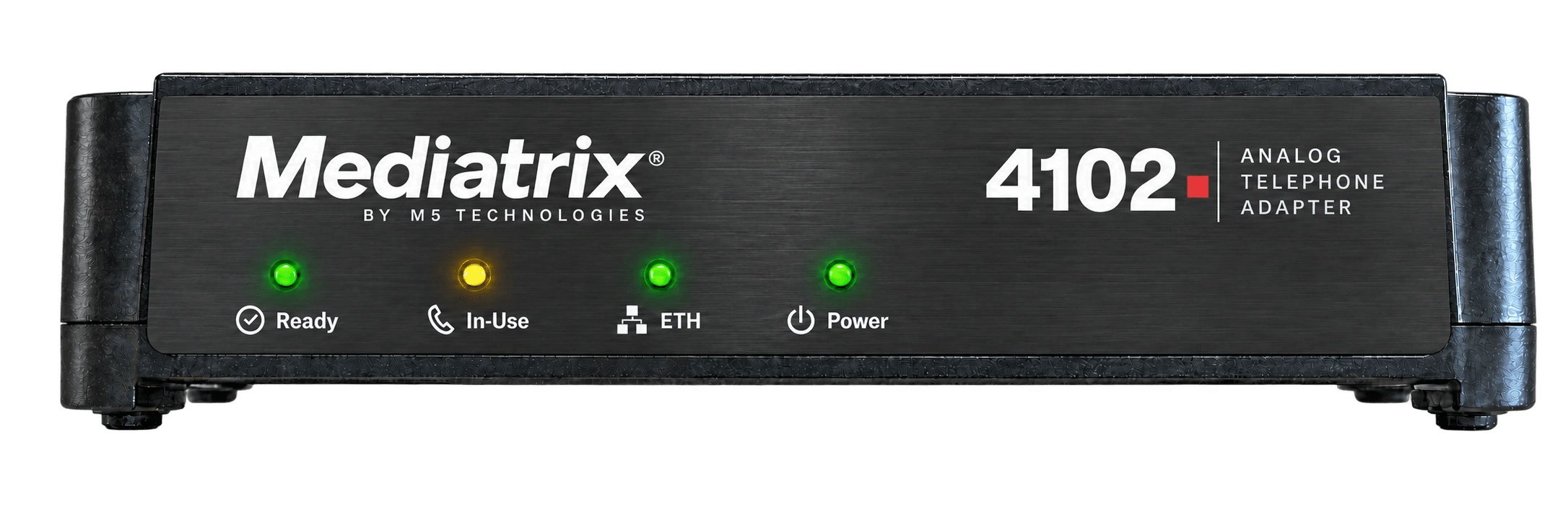
Mediatrix 4102SSmall analog migration2 FXSTwo phones, fax, branch or limited POTS replacement
Mediatrix C7 SeriesHigher-density analog endpointsMultiple FXS/FXO configurations by modelBuildings, campuses, hotels, healthcare and public sector
Mediatrix G7 SeriesComplex legacy migrationAnalog, PRI, BRI, FXO and SIP optionsPBX, carrier and mixed analog/digital transformation
Sentinel 400Secure hybrid voice edgeMicrosoft-certified SBC plus gateway capabilitiesMicrosoft Teams Direct Routing, SIP trunks, PBX coexistence and policy-controlled migration
Vendor comparison

Mediatrix compared with common gateway alternatives.

Capabilities vary by model and release. This table focuses on typical buyer considerations rather than absolute product claims.

Vendor / CategoryTypical strengthTypical fitMediatrix / M5 differentiation
Mediatrix / M5ATA, gateway, SIP software and Sentinel SBC portfolioEnterprise, government, operators and critical infrastructureBalanced analog migration, SIP depth, lifecycle and secure edge architecture
AudioCodesMature media gateway and SBC portfolioEnterprise, service provider and Microsoft ecosystemsM5 emphasizes Mediatrix gateway heritage plus Sentinel SBC flexibility
GrandstreamCost-effective ATA and analog gateway rangesSMB and cost-sensitive deploymentsM5 is positioned for controlled enterprise and critical projects
SangomaGateway and PBX migration productsSMB, branch and PBX modernizationM5 combines gateway migration with broader SIP security architecture
DinstarHigh-density cost-focused analog gateway optionsCall centers and budget-sensitive analog migrationM5 differentiates on lifecycle, support, SIP expertise and critical use cases
Cisco ATA categorySimple endpoint conversion in Cisco-oriented environmentsSmall analog endpoint requirementsMediatrix supports broader migration, provisioning and multi-platform architectures
Microsoft Teams Direct Routing

Connect analog and legacy voice to Microsoft Teams through a certified Sentinel SBC.

Mediatrix ATAs and media gateways are not themselves Microsoft-certified SBCs. They integrate with Microsoft Teams Direct Routing when deployed behind a Microsoft-certified Sentinel SBC, which provides the certified SIP boundary, routing, security and interoperability layer.

01

Microsoft-Certified SBC

Sentinel SBCs provide the certified Direct Routing connection between Microsoft Teams Phone and enterprise voice infrastructure.

02

Mediatrix Gateway Integration

Mediatrix gateways preserve analog, PBX, PRI, BRI, fax and legacy services inside the broader Teams architecture.

03

Controlled Hybrid Migration

Organizations can migrate users and sites to Teams while maintaining existing analog and legacy voice services.

Analog & Legacy SystemsPhones, fax, PBX, elevators, alarms and emergency endpoints
Mediatrix GatewayFXS, FXO, PRI, BRI and SIP interworking
Microsoft-Certified Sentinel SBCTeams Direct Routing, SIP security and routing policy
Microsoft Teams PhoneEnterprise calling, collaboration and cloud communications
Use cases

Where media gateways and ATAs create the most value.

POTS replacement

ProblemCopper service is retired but analog endpoints remain.
M5 approachMove compatible endpoints to SIP using the correct gateway and SBC layer.
OutcomeReduce copper dependency without unnecessary device replacement.

Fax and modem migration

ProblemFax and modem workflows must survive the move to IP.
M5 approachUse appropriate gateway, codec and T.38 or pass-through design.
OutcomeRetain compatible workflows on modern transport.

Elevator and emergency phones

ProblemLife-safety endpoints require reliable power, signaling and calling behavior.
M5 approachEngineer the endpoint, line, gateway, power and emergency path together.
OutcomeModernize while preserving operational requirements.

PBX migration

ProblemLegacy PBX and digital trunks must coexist with SIP.
M5 approachUse G7 or Sentinel 400 for controlled hybrid interworking.
OutcomeMove users and services in phases.

Hospitality and healthcare

ProblemMany rooms, devices and facilities still depend on analog service.
M5 approachDeploy managed multi-port gateways with centralized provisioning.
OutcomeStandardize large analog estates and reduce support effort.

Long-loop environments

ProblemEndpoints are far from telecom equipment across large sites.
M5 approachValidate distance, voltage, impedance, cable and endpoint behavior.
OutcomeReduce installation failure in campuses, utilities, rail and industrial sites.
Reference architecture

From analog endpoint to secure cloud or enterprise voice.

Analog systemsPhones, fax, alarms, elevators and PBX lines
Mediatrix gatewayFXS, FXO, PRI, BRI and SIP interworking
Microsoft-Certified Sentinel SBCTeams Direct Routing, SIP security, routing, normalization and policy
Modern voice platformCarrier, cloud PBX, IP-PBX, Teams or UC
Migration roadmap

Modernize analog infrastructure in controlled stages.

1

Inventory

Document endpoints, ports, lines, distances, PBXs and carrier services.

2

Classify

Separate standard phones from fax, alarm, elevator and emergency devices.

3

Select

Choose ATA, C7, G7 or Sentinel 400 according to interfaces and scale.

4

Validate

Test signaling, fax, DTMF, loop behavior, power and failover.

5

Deploy

Roll out by site with provisioning, monitoring and rollback plans.

Expected outcomes

What the architecture is designed to improve.

Lower replacement costPreserve compatible analog and legacy endpoints where practical.
Better SIP controlUse explicit routing, normalization and edge-security policy.
Reduced support burdenStandardize provisioning and distributed gateway management.
Safer migrationValidate critical device behavior before large-scale rollout.
FAQ

Questions buyers ask about ATAs and media gateways.

What is an ATA?

An Analog Telephone Adapter connects one or a few analog endpoints to SIP or VoIP infrastructure.

What is the difference between an ATA and a media gateway?

An ATA normally serves a small number of analog endpoints. A media gateway supports larger or more complex analog, digital, PBX and trunk-migration requirements.

What is the difference between FXS and FXO?

FXS provides line service to an analog endpoint. FXO receives analog line service from a PSTN line or PBX interface.

Can a media gateway replace POTS?

It can be part of a POTS replacement design, but endpoint behavior, power, life-safety, emergency and regulatory requirements must be validated.

Can a Mediatrix gateway work with Microsoft Teams?

Yes. Mediatrix gateways integrate with Microsoft Teams Direct Routing through a Microsoft-certified Sentinel SBC. The Sentinel SBC provides the certified Teams connection, SIP security, routing and interoperability layer.

Which M5 products are certified for Microsoft Teams Direct Routing?

The Sentinel SBC portfolio is designed for Microsoft Teams Direct Routing deployments. Certification status should be confirmed for the specific Sentinel model and current Microsoft certification listing before procurement.

What is long-loop analog voice?

It refers to analog endpoints located far from the gateway or PBX over copper cabling, requiring validation of distance, voltage, impedance and endpoint behavior.

Media gateway assessment

Validate the endpoints, interfaces and SIP architecture before deployment.

Provide a high-level overview of the analog estate, sites, platforms and migration goals. M5 can help identify the correct ATA, gateway, Sentinel SBC and rollout path.

  • Analog phones, fax, elevators, alarms and emergency endpoints
  • FXS, FXO, PRI, BRI and PBX requirements
  • SIP carrier, cloud PBX, IP-PBX or Microsoft Teams Direct Routing architecture
  • Long-loop, power, failover and survivability needs
  • 4102S, C7, G7 or Sentinel 400 selection

Request a Gateway Assessment

Business inquiry only. Do not submit passwords, credentials or confidential network information.

Thank you. Your media gateway request has been submitted successfully.