Skip to content
Microsoft Teams certified secure voice infrastructure · SBC · Gateways · Embedded voice
Telecom Security for Defense | Secure SIP, SBC, Critical Voice Infrastructure | M5 Technologies
Telecom Security for Defense

Secure telecom infrastructure for defense-grade communications.

M5 Technologies helps defense, government and mission-critical organizations secure SIP infrastructure, protect voice networks, modernize legacy telecom systems and build resilient communications architectures using SBCs, media gateways, secure signaling and embedded voice technologies.

Secure telecom network operations center
Defense Telecom Security Layer SIP security · SBC edge · TLS/SRTP · Gateway interoperability · Survivable voice
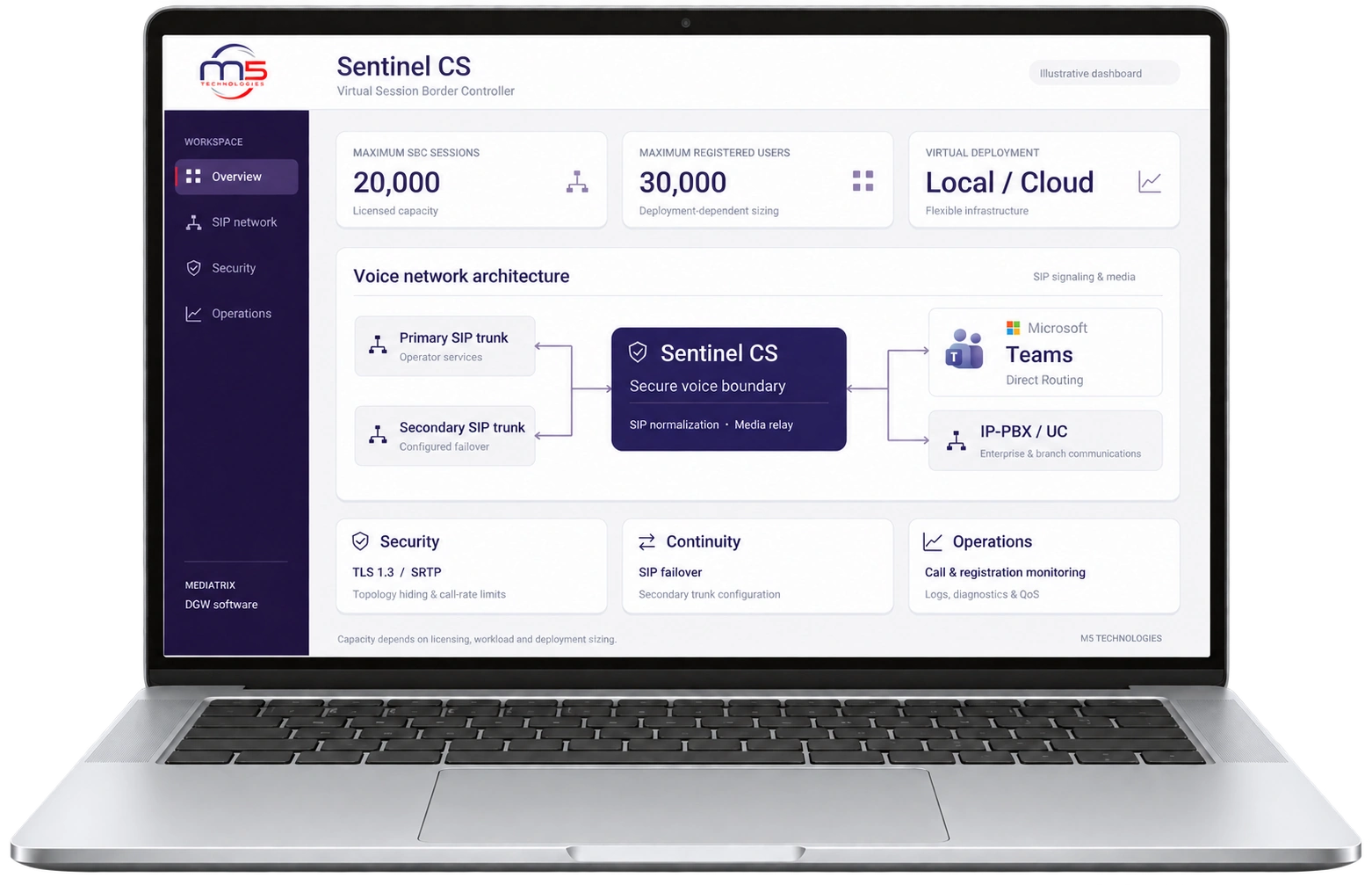
SBCSecure SIP edge control
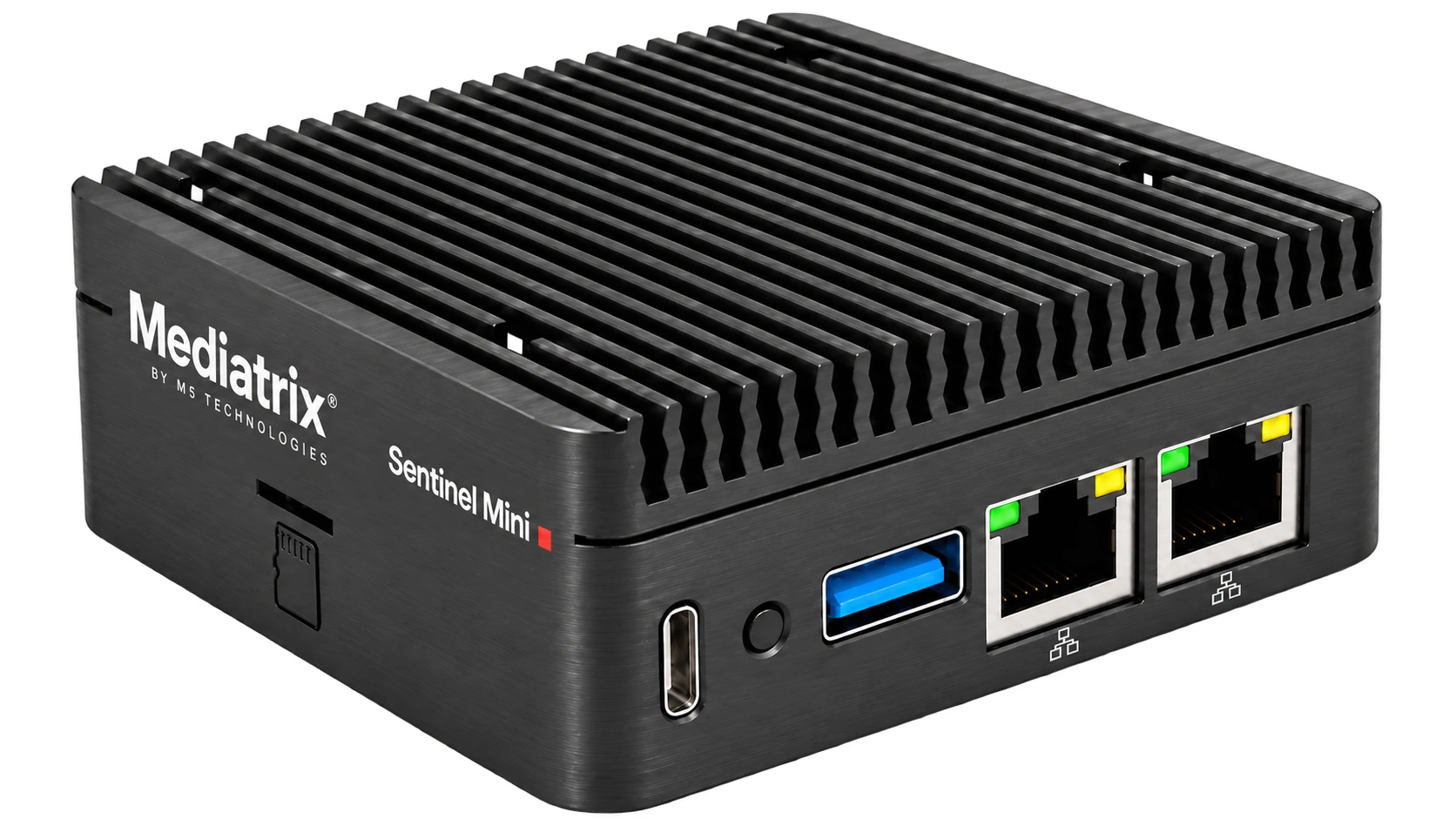
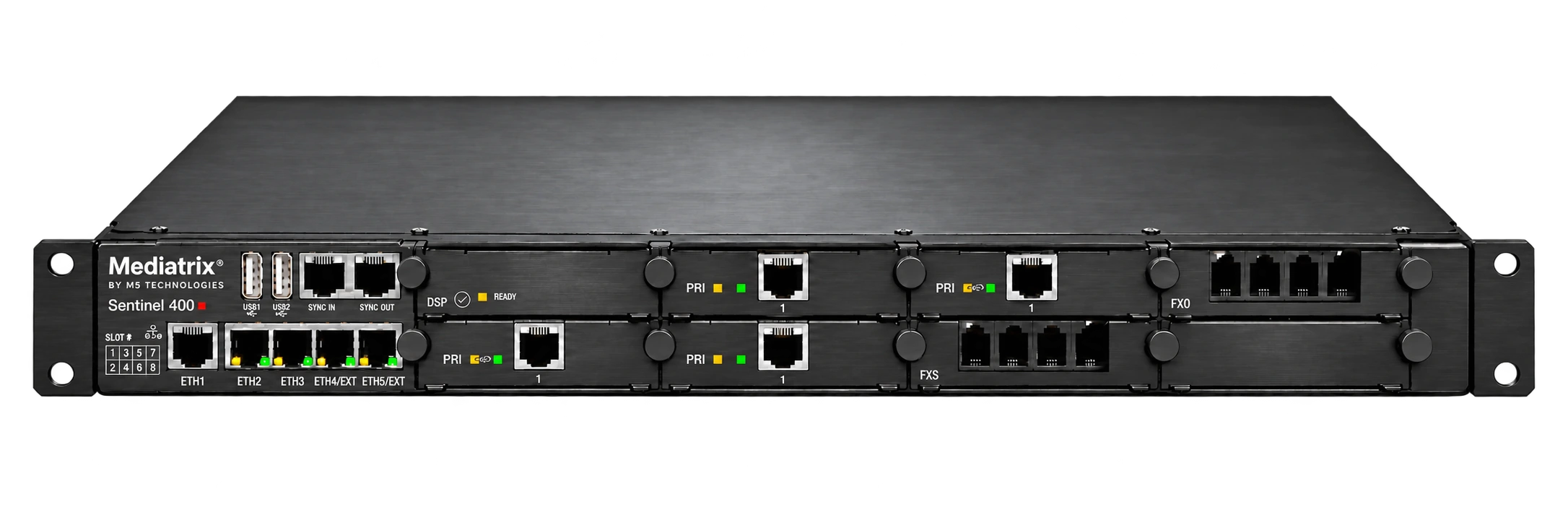
GatewayLegacy-to-IP modernization
HybridOn-prem, virtual and edge
Defense Voice SecuritySecure telecom infrastructure for mission-critical operational communications.
SIP Edge ProtectionTopology hiding, SIP normalization, policy enforcement and secure interconnection.
Legacy InteroperabilityBridge analog, PBX, SIP trunk and field voice systems into secure IP architecture.
Survivable CommunicationsHybrid voice architecture designed for redundancy, continuity and operational resilience.

Defense telecom security starts at the signaling edge.

Defense communications environments are increasingly exposed to complex interoperability demands. SIP trunks, cloud voice, legacy PBXs, analog endpoints, tactical communications systems, command centers and remote sites all create potential trust boundaries. A defense-grade telecom security architecture must protect signaling, secure media paths, preserve operational continuity and allow modernization without breaking mission-critical voice workflows.

01

Control the SIP boundary

Session Border Controllers establish a secure demarcation point between trusted defense networks and external or hybrid voice environments.

  • SIP policy enforcement
  • Topology hiding
  • Traffic filtering
  • Secure trunk interconnection
02

Harden mission-critical voice

Telecom security requires more than encryption. Defense environments need controlled routing, normalization, monitoring, failover and visibility.

  • TLS/SRTP readiness
  • DoS exposure reduction
  • Malformed SIP mitigation
  • Operational continuity
03

Modernize without disruption

Media gateways and hybrid SBC architecture allow phased migration from legacy voice systems to secure IP communications.

  • Analog preservation
  • PBX migration
  • Gateway interoperability
  • Legacy-to-IP roadmap
Cybersecurity operations center
Telecom Cyber DefenseSecure SIP, voice edge protection and operational visibility for defense communications networks.
Mission critical communications infrastructure
Mission-Critical Voice ContinuityResilient telecom infrastructure for command centers, government facilities and secure operations.

Telecom security use cases for defense and mission-critical environments.

M5 Technologies supports defense communications modernization scenarios where SIP security, gateway interoperability, operational continuity and secure voice architecture are essential.

CMD

Command Center Voice Security

ChallengeCommand centers require secure, reliable communications across internal users, external trunks, operators, remote sites and legacy systems.
M5 capabilitySBC demarcation, SIP normalization, topology hiding, secure trunking, gateway interoperability and failover-ready voice architecture.
OutcomeReduced telecom exposure, improved voice continuity and stronger control over critical communications paths.
SIP

Secure SIP Trunking for Defense

ChallengeSIP trunks create external trust boundaries that require policy control, authentication, routing control and visibility.
M5 capabilitySession Border Controller enforcement, TLS/SRTP readiness, SIP header normalization and traffic filtering.
OutcomeMore secure carrier, cloud, operator and inter-agency voice interconnection.
LEG

Legacy Defense Voice Modernization

ChallengeDefense sites often rely on analog, PBX, fax, alarm or operational voice systems that cannot be replaced immediately.
M5 capabilityMediatrix gateways bridge legacy systems to SIP/IP while preserving continuity and phased modernization.
OutcomeLower migration risk and better modernization control across operational voice assets.
GOV

Government Secure Voice Networks

ChallengeGovernment agencies must protect communications between departments, facilities, operators, public safety groups and critical infrastructure partners.
M5 capabilitySecure SIP routing, SBC policy enforcement, interoperability control and survivability design.
OutcomeImproved security posture and reduced fragmentation in government voice infrastructure.
TAC

Tactical Edge Communications

ChallengeTactical sites and mobile operations may require secure communications across constrained, distributed or hybrid networks.
M5 capabilityVirtual SBC, edge gateways, secure SIP transport, local survivability and controlled routing.
OutcomeStronger tactical communications continuity and secure field-to-command voice integration.
OEM

Defense OEM Voice Integration

ChallengeDefense platforms may require embedded SIP, secure voice and media capabilities inside custom systems.
M5 capabilityM5T SIP Client Engine, embedded voice integration and softDSP components.
OutcomeFaster development of secure voice-enabled defense systems and specialized operational platforms.

From exposed voice systems to a secure telecom security fabric.

The architecture connects users, trunks, PBXs, gateways, command centers, operators, cloud platforms and tactical sites through a controlled security layer.

1. Defense UserCommand staff, operator, tactical user, government department or secure facility endpoint.
2. Voice AccessAnalog, SIP, PBX, SIP trunk, cloud voice, OEM voice or operational communications system.
3. M5 SBC / GatewayEnforces SIP policy, bridges legacy systems, hides topology and controls interconnection.
4. Secure TransportTLS/SRTP, QoS, routing control, survivability, segmentation and operational monitoring.
5. Defense Voice CoreOn-premise, virtual, hybrid, command center, tactical edge or government voice network.
CTO note: Defense telecom security should be designed around trust boundaries, signaling control, secure media, identity, redundancy, logging, interoperability and controlled modernization. SBCs and gateways become the enforcement layer between legacy systems, operators, cloud services and mission-critical users.

Structured capabilities for defense telecom security planning.

This CTO-level matrix helps engineering, cybersecurity, procurement and operations teams map defense communications requirements to M5 infrastructure capabilities.

SEC

SIP Security & SBC Enforcement

Threats addressedSIP scanning, malformed packets, unauthorized registration, spoofing attempts, toll fraud exposure and topology leakage.
ControlsSIP normalization, access policy, header control, rate limiting, topology hiding and secure session demarcation.
Security valueReduces attack surface at the telecom edge and creates a controlled trust boundary.
ENC

Encryption & Secure Transport

SignalingTLS-ready SIP signaling where supported by the deployment architecture.
MediaSRTP-ready encrypted media paths where supported by connected systems.
Operational valueSupports confidentiality and integrity goals for sensitive voice environments.
SUR

Survivability & Redundancy

Continuity modelLocal survivability, failover routing, redundant SIP paths, alternate gateways and hybrid architecture.
Defense valueMaintains operational voice during site disruption, network degradation or interconnection failure.
Deployment fitCommand centers, bases, secure facilities, government campuses and tactical edge locations.
LEG

Legacy Interoperability

Legacy systemsAnalog lines, PBX trunks, fax, alarms, elevators, secure facility voice endpoints and operational phones.
Modernization pathBridge legacy systems to SIP/IP while preserving continuity and reducing migration disruption.
BenefitAllows modernization without immediate replacement of all existing voice infrastructure.
DEP

Deployment Models

On-premise defense sitesLocal SBCs and gateways for secure facilities requiring direct control and survivability.
Virtual / cloud defense architectureVirtual SBCs for scalable policy enforcement and secure centralized routing.
Hybrid mission-critical networksCombines local survivability, WAN routing, cloud policy and secure edge demarcation.
Embedded / OEM voiceM5T and softDSP technologies for voice integration into defense platforms and specialized systems.

Why defense telecom security needs more than a firewall.

Traditional network security tools are not sufficient to fully protect real-time voice infrastructure. SIP is a signaling protocol with unique behaviors, header structures, routing dependencies and media negotiation requirements. Defense organizations need controls that understand voice sessions, protect SIP topology, enforce call policies, normalize protocol variations, secure signaling and support survivable architecture. M5 Technologies provides the telecom security layer required to modernize defense voice systems while reducing risk at the communications edge.

A

Assess voice attack surface

Map SIP trunks, PBXs, gateways, analog endpoints, external carriers, cloud voice platforms and inter-agency connections.

B

Segment and enforce policy

Use SBCs to isolate voice zones, enforce routing logic, normalize signaling and reduce topology exposure.

C

Modernize with continuity

Use gateways and hybrid deployment models to migrate legacy systems while preserving critical voice workflows.

Search-ready answers for CTOs, security teams and defense communications leaders.

What is telecom security for defense?

Telecom security for defense focuses on protecting voice, SIP, trunking, gateway and operational communications systems used by defense organizations, military facilities, government agencies and mission-critical environments.

Why is SIP security important for defense?

SIP controls real-time voice signaling. If left exposed, it can reveal topology, permit unauthorized attempts, create fraud risks or allow malformed traffic to impact communications infrastructure.

How does an SBC improve telecom security?

An SBC provides a secure demarcation point for SIP traffic. It can hide topology, normalize SIP messages, enforce policies, control access and support secure interconnection with external networks.

Can M5 help modernize legacy defense voice systems?

Yes. M5 gateways can bridge analog, PBX and legacy voice systems into SIP/IP architectures while supporting phased migration and operational continuity.

Does M5 support encrypted voice communications?

M5 infrastructure can support TLS for SIP signaling and SRTP for media when the connected systems and deployment environment are configured to support those protocols.

Can this architecture be deployed on-premise?

Yes. Defense environments often require on-premise infrastructure for local control, security and survivability. M5 also supports virtual and hybrid deployment models.

Is this only for military users?

No. It applies to defense contractors, government facilities, public safety operations, critical infrastructure, command centers, transportation networks and secure enterprise environments.

What is the first step?

The first step is a telecom security assessment that maps SIP exposure, legacy dependencies, routing paths, redundancy, encryption requirements and operational continuity risks.

Build a secure defense communications roadmap.

M5 Technologies can help evaluate your telecom environment, identify SIP security gaps, map legacy dependencies and define a modernization path for secure SBC, gateway and embedded voice infrastructure.

  • Review SIP trunks, PBXs, gateways and external voice interconnections.
  • Evaluate SBC placement and voice trust boundaries.
  • Assess TLS/SRTP readiness and secure signaling requirements.
  • Map legacy-to-IP modernization requirements.
  • Define on-premise, virtual, hybrid or tactical edge deployment architecture.

Request Defense Telecom Assessment

Required fields are validated before submission.